
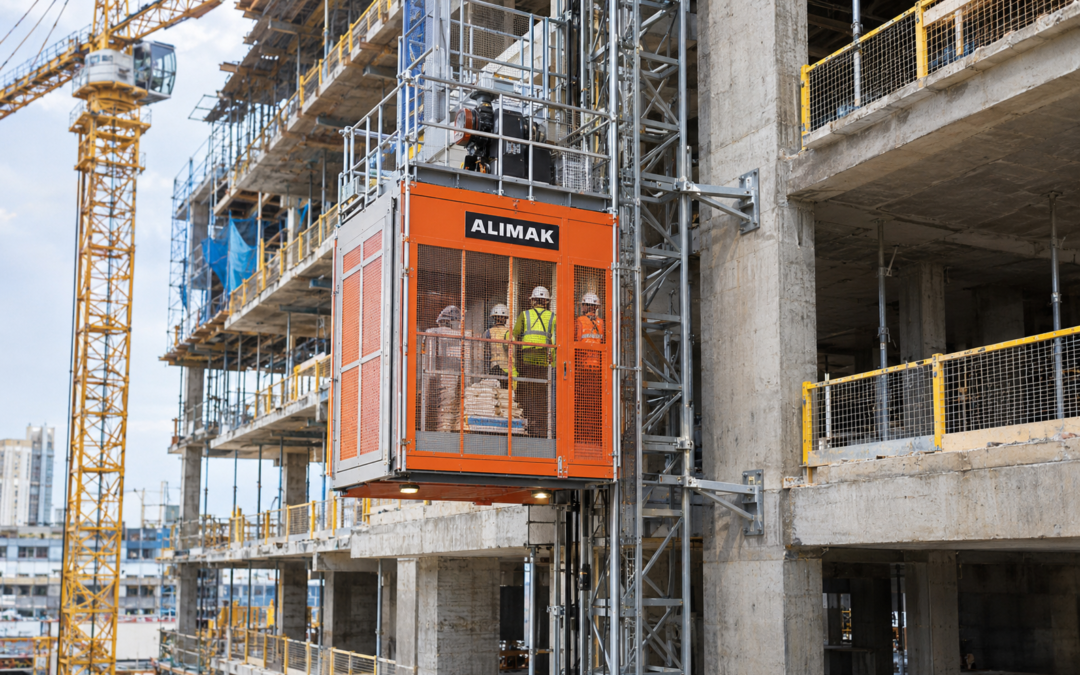
Construction hoist rental vs purchase: for most contractors, renting is the better choice when the hoist is needed for one project or a defined period, because installation, inspections, maintenance and dismantling come with the rental. Buying pays off when you have a continuous pipeline of projects that keeps the hoist working, plus the people and budget to install, inspect, maintain, store and move it yourself.
This guide sets out the real cost of owning a construction hoist, when each option wins, and what changes on Caribbean projects, where freight, technicians and hurricane season weigh more than on the mainland.
Quick answer: rent or buy?
Rent a construction hoist when:
- the hoist is needed for a single project or a fixed period
- your next project may need a different height, payload or car size
- you have no in-house team to install, inspect and maintain hoists
- you want one supplier responsible for uptime, with technicians nearby
Buy a construction hoist when:
- you have a steady pipeline of high-rise projects that keeps the hoist in use most of the year
- you can install, dismantle, inspect and maintain it with trained staff, or under a service agreement
- you have secure storage and transport between projects
- you need a configuration you cannot reliably rent in your market
What does it really cost to own a construction hoist?
The purchase price is only the first line. Most owners underestimate the costs that follow:
- Purchase: the hoist plus enough mast sections, ties and landing gates for the tallest building you expect to serve.
- Freight and import: shipping to the island, customs clearance and local transport for each project.
- Installation and dismantling: on every project, by trained technicians, with crane or lifting support.
- Inspections and tests: after installation and at regular intervals. In Puerto Rico, US rules require construction hoists to be inspected and tested by a competent person after erection and at least every 3 months (OSHA 29 CFR 1926.552).
- Maintenance and spare parts: preventive maintenance and genuine parts, which Alimak recommends to extend equipment life (Alimak service solutions).
- Training: certified operators and technicians. Alimak runs training courses for operation, maintenance and installation.
- Storage between projects: a secure, dry yard, protected during hurricane season.
- Insurance for the equipment and its operation.
- Downtime risk: if the hoist fails, the owner carries the cost of the stoppage until it is repaired.
- End of life: resale, or a refurbishment to extend the equipment's life. Alimak offers refurbishment solutions that include an inspection, evaluation report and cost proposal.
When you rent, most of these costs sit with the rental provider. Bridge360's construction hoist rental includes installation, inspections by certified technicians, maintenance, 24/7 support and dismantling.
Why does utilization decide the answer?
Ownership costs are largely fixed: you pay for the hoist, its storage and its insurance whether it works or not. Rental is paid for the period you have it. The more months per year an owned hoist works on a paying project, the lower its cost per month, which is why utilization (the share of time the equipment is actually in use) drives the decision. Construction Equipment explains this trade-off with a worked example for equipment fleets.
In practice, compare two numbers before deciding:
- The rental cost for the months you need the hoist on each project (including installation and dismantling).
- The annual cost of owning (financing or depreciation, maintenance, inspections, storage, insurance, freight between projects), divided by the months the hoist will realistically work.
If you cannot keep an owned hoist busy for most of the year, renting is usually cheaper.
Comparison template (fill in with your own quotes):
| Cost item (per year) | Rent | Own |
|---|---|---|
| Rental fees for the months on site | ____ | — |
| Financing or depreciation of the hoist and mast | — | ____ |
| Installation and dismantling, per project × projects per year | included / ____ | ____ |
| Inspections and tests | included / ____ | ____ |
| Maintenance and spare parts | included / ____ | ____ |
| Freight and import between projects | ____ | ____ |
| Storage and insurance | — | ____ |
| Training of operators and technicians | — | ____ |
| Total per year | ____ | ____ |
| Months in use per year | ____ | ____ |
| Cost per month in use | ____ | ____ |
Rent vs buy: decision table
| Factor | Rent if… | Buy if… |
|---|---|---|
| Project pipeline | One project or irregular work | Continuous high-rise work for several years |
| Configuration | Height, payload or car size changes between projects | Projects are similar and the configuration repeats |
| In-house capability | No hoist installers or technicians | Trained team, or a service agreement in place |
| Cash flow | You prefer an operating cost | You can fund the capital cost |
| Storage and logistics | No secure yard; projects on different islands | Secure storage and transport available |
| Risk | You want the supplier to own uptime | You can manage breakdowns and spare parts |
When does buying a construction hoist make sense?
Buying makes sense for contractors and developers with a pipeline that keeps a hoist working for years, typically on repeated high-rise residential, hotel or commercial towers. One US hoist provider, UCEL, puts the threshold at roughly three years or more of use, and also recommends buying when a project needs a configuration that rental fleets do not offer. Treat any rule of thumb as a starting point and run your own numbers.
A mixed approach is also common in the equipment industry: own the equipment you use constantly and rent for peaks or special projects (Cleveland Brothers). For hoists, that can mean owning a standard unit such as an Alimak Scando 450 and renting a high-speed Alimak Scando 650 for a taller tower.
If you buy, plan from day one for a maintenance agreement, trained operators and a storage plan for hurricane season.
When is renting the better choice?
Renting is the better choice when:
- The project is the only one in sight. You pay for the months you use and return the hoist at handover.
- Each project is different. You can rent the right model for each job: a Scando 650 for a 30-story tower, a Scando 450 for a mid-rise, an Alimak LSH in the shaft for early facade closure.
- You do not have hoist specialists. Installation, inspections and maintenance are part of the rental service.
- Uptime matters more than ownership. A supplier with nearby technicians and spare parts carries the responsibility for keeping the hoist running.
What changes on Caribbean projects?
Caribbean conditions shift the balance because of:
- Freight between islands. Moving an owned hoist from one island to another adds shipping, customs and handling costs on every project.
- Technician availability. An owner needs certified installers and service technicians available in each market, or must fly them in.
- Storage in hurricane season. An owned hoist between projects needs secure storage from June to November.
- Corrosion. Salt air and humidity make maintenance and storage conditions more important for an owned unit.
- Local requirements. Puerto Rico follows US OSHA rules; in Jamaica, Trinidad and Tobago and Barbados, confirm inspection requirements with the national authority.
For many contractors working across Jamaica, Trinidad and Tobago, Barbados and Puerto Rico, these factors make rental with regional support the lower-risk option. Owners in a single market with steady work may reach the opposite conclusion.
What should you ask before deciding?
- How many months per year will the hoist work on paying projects over the next three to five years?
- Will the next projects need the same height, payload and car size?
- Who will install, inspect, maintain and dismantle the hoist?
- Where will it be stored between projects and during hurricane season?
- What does freight cost between your project locations?
- What does a full rental for each project cost, including installation and dismantling?
Our construction hoist planning checklist helps you define height, payload and configuration, and our construction hoist rental guide covers what to check before renting.
How Bridge360 can help
Bridge360 rents and sells Alimak construction hoists in the Caribbean, so the recommendation can follow your numbers rather than a single business model. With over 13 years of experience with Alimak equipment in the region, certified technicians and 24/7 support, Bridge360 can quote both options for the same project so you can compare them side by side.
Compare rental and purchase for your project
Frequently asked questions
Is it cheaper to rent or buy a construction hoist? For a single project or irregular work, renting is usually cheaper once installation, inspections, maintenance, storage and freight are included. Buying becomes cheaper when the hoist works on paying projects most of the year for several years.
How long do you need a hoist for buying to make sense? It depends on utilization and costs, not on a fixed period. One US provider suggests roughly three years or more of use; calculate it with your own rental quotes and ownership costs.
What is included in a construction hoist rental? With Bridge360: installation, inspections by certified technicians, maintenance, 24/7 support and dismantling. Confirm the exact scope in each quote.
What does an owner need besides the hoist? Enough mast sections and ties, trained operators and technicians, a maintenance plan with genuine parts, inspections, insurance, storage and transport between projects.
Can I buy an Alimak construction hoist from Bridge360? Yes. Bridge360 supplies Alimak construction hoists for purchase or rental in the Caribbean. Contact the team for a quote on the model and configuration you need.