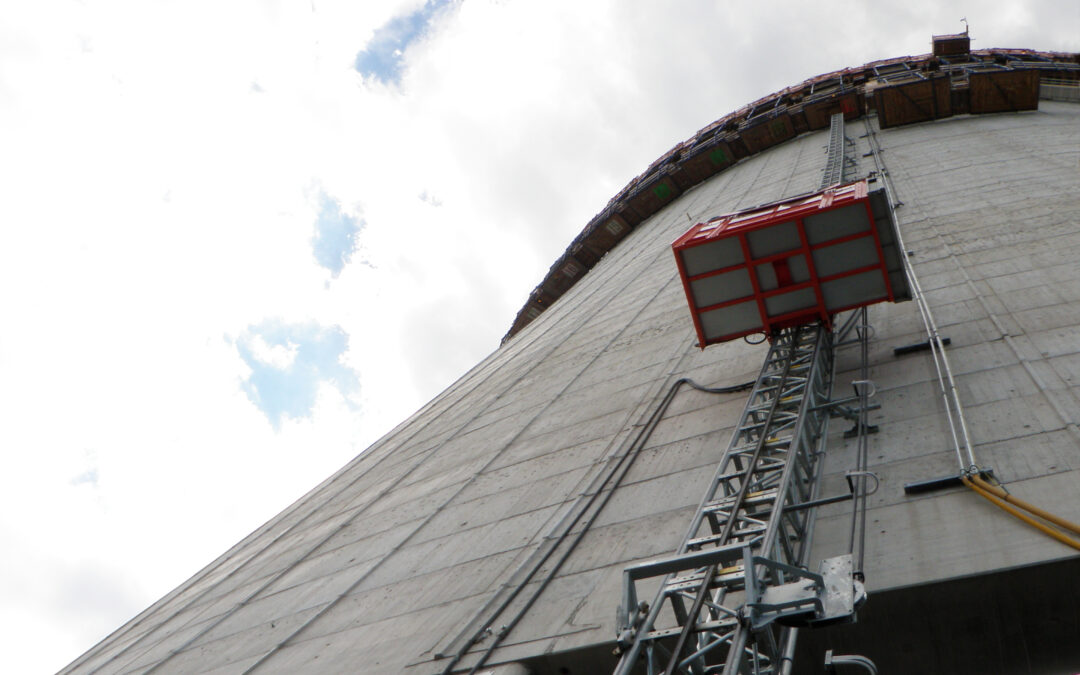
Industrial elevators for oil and gas facilities in Trinidad & Tobago must be specified for hazardous-area classification, corrosion exposure, payload, travel height, duty cycle and maintenance access. For refineries, LNG plants, petrochemical facilities and offshore platforms, explosion-protected rack-and-pinion systems such as the Alimak SE-Ex may be required when flammable gases, vapors or combustible dust are present.
Trinidad & Tobago is one of the Caribbean’s most important energy and industrial markets. From Point Lisas to offshore platforms, vertical access is not just a convenience. It is part of the facility’s safety, maintenance and uptime strategy.
In oil, gas and petrochemical environments, a standard commercial elevator is usually not enough. Facilities may face explosive atmospheres, corrosive marine air, elevated structures, confined installation areas, continuous maintenance needs and high consequences of downtime.
Bridge360 provides Alimak industrial elevator solutions for demanding Caribbean environments, including Trinidad & Tobago, where energy, heavy industry, ports and marine operations require reliable vertical access.
what type of industrial elevator does an oil and gas facility need?
Oil and gas facilities in Trinidad & Tobago need industrial elevators specified around hazardous-area classification, payload, travel height, corrosion exposure, duty cycle and maintenance requirements. In classified areas, explosion-protected solutions such as the Alimak SE-Ex may be required to support safer vertical access for personnel, tools and materials.
Who should use this guide?
This guide is for facility managers, HSE teams, maintenance leaders, project engineers and procurement teams evaluating vertical access for refineries, petrochemical plants, LNG facilities, offshore platforms, ports and heavy industrial sites in Trinidad & Tobago.
It is especially useful if your team needs to evaluate:
- Permanent industrial elevators.
- Explosion-protected vertical access.
- Offshore or marine elevator applications.
- Heavy-duty freight and personnel transport.
- Safer alternatives to ladder climbing.
- Maintenance access for elevated structures.
- Regional service and spare parts support.
- Long-term elevator reliability in harsh Caribbean conditions.
Why vertical access matters in Trinidad & Tobago’s oil and gas sector
Vertical access matters in oil and gas because maintenance crews, inspectors, operators and critical components need to move safely across elevated structures without slowing down operations.
In a refinery, petrochemical plant or offshore facility, access delays can affect inspections, maintenance windows, emergency response and operational continuity.
The most common access challenges include:
- Reaching elevated process equipment.
- Transporting tools and spare parts.
- Moving personnel safely in hazardous areas.
- Reducing ladder climbing on tall industrial structures.
- Supporting scheduled maintenance.
- Improving response time during equipment issues.
- Reducing physical strain on workers.
- Maintaining uptime in high-value operations.
For facilities in Trinidad & Tobago, these challenges are intensified by salt air, heat, humidity, heavy industrial loads and strict safety expectations.
Why oil and gas facilities need specialized industrial elevators
Oil and gas facilities need specialized industrial elevators because the operating environment is harsher than a typical commercial or residential building.
A commercial elevator is usually designed for clean, controlled environments. Oil and gas facilities are different.
They may include:
- Flammable gases or vapors.
- Combustible dust or hazardous classifications.
- Marine corrosion.
- Offshore movement and vibration.
- High-duty maintenance cycles.
- Heavy components and tools.
- Remote access points.
- Strict safety documentation.
- Limited shutdown windows.
That is why the elevator selection should not start with cabin appearance or basic passenger capacity.
It should start with the facility’s risk profile.
What makes an industrial elevator suitable for oil and gas?
An industrial elevator suitable for oil and gas should match the facility’s hazardous classification, payload requirements, corrosion exposure, duty cycle, travel height, maintenance strategy and safety documentation needs.
| Selection factor | Why it matters in oil and gas |
|---|---|
| Hazardous-area classification | Some areas may require explosion-protected equipment |
| Payload capacity | Personnel, tools, components and spare parts may travel together |
| Corrosion resistance | Coastal and offshore environments accelerate wear |
| Duty cycle | Maintenance and operations may require frequent daily use |
| Travel height | Stacks, towers, platforms and process structures may require high vertical reach |
| Safety documentation | Inspections, insurance and HSE teams require clear records |
| Maintenance support | Downtime can affect production, safety and compliance |
For Trinidad & Tobago facilities, these factors should be reviewed before choosing the elevator model.
Why rack-and-pinion technology fits harsh industrial environments
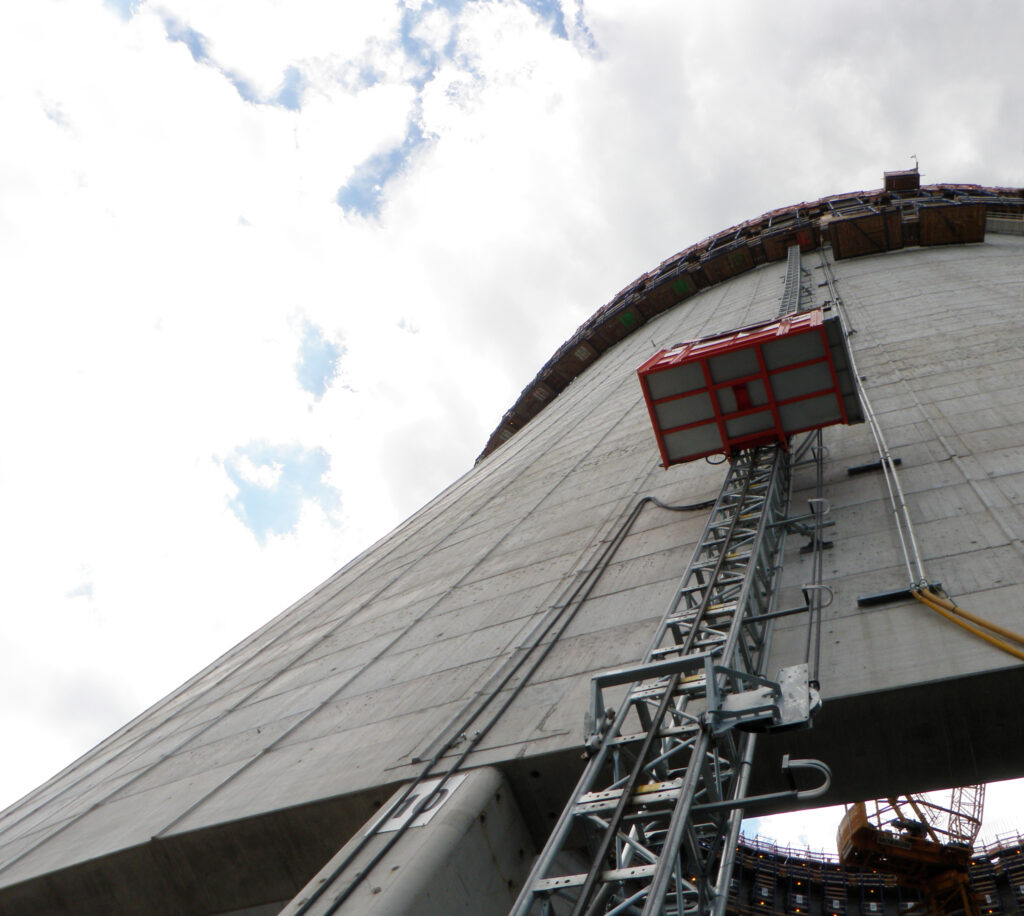
Rack-and-pinion elevators use a motorized pinion gear that travels along a fixed rack attached to the mast. This design eliminates the need for conventional traction cables and a separate machine room, making it especially useful in industrial environments with dust, corrosion, vibration and limited structural space.
In oil and gas facilities, this matters because the elevator may need to operate near process units, tanks, marine structures, offshore platforms or elevated maintenance areas.
Rack-and-pinion technology can support:
- Outdoor installations.
- Harsh weather exposure.
- Industrial structures without traditional elevator shafts.
- Heavy-duty vertical transport.
- Flexible installation configurations.
- Personnel and freight movement.
- Permanent access for maintenance and inspection.
For Bridge360, rack-and-pinion technology is central to providing vertical access solutions for Trinidad & Tobago and other Caribbean industrial markets.
Alimak SE-Ex: explosion-protected vertical access for hazardous areas
The Alimak SE-Ex is designed for hazardous industrial environments where flammable gases, vapors or combustible dust may create explosion risk.
This makes it a strong fit for oil and gas facilities, refineries, petrochemical plants, LNG facilities and offshore platforms where safety classification is a central part of equipment selection.
The SE-Ex should be considered when a facility requires:
- Explosion-protected vertical access.
- Personnel and material transport in hazardous areas.
- Certified equipment for high-risk industrial environments.
- A rack-and-pinion system for demanding structures.
- Durable access for inspection and maintenance teams.
- Long-term support for critical operations.
For Trinidad & Tobago’s energy sector, the Alimak SE-Ex is one of the most relevant models in Bridge360’s industrial elevator portfolio.
ATEX vs IECEx: what project teams should know
ATEX and IECEx both relate to equipment used in explosive atmospheres, but they are not the same framework.
ATEX is commonly associated with European requirements for equipment used in potentially explosive atmospheres. IECEx is an international certification system built around IEC standards for equipment, services and personnel working in explosive atmospheres.
For Trinidad & Tobago oil, gas and petrochemical facilities, the key decision is not whether the term sounds familiar.
The key decision is whether the elevator configuration matches the site’s hazardous-area classification, gas group, temperature class, environment and documentation requirements.
Recommended Alimak elevator by oil and gas application
| Application | Main operating risk | Recommended Alimak direction | Relevant Bridge360 page |
|---|---|---|---|
| Refineries | Flammable vapors, elevated structures and maintenance access | Alimak SE-Ex for hazardous areas; Alimak SE for non-hazardous access | Alimak SE-Ex |
| Petrochemical plants | Hazardous classification, heat, corrosion and continuous operation | Alimak SE-Ex or Alimak SE-H depending on classification and payload | Industrial Elevators |
| LNG and gas processing facilities | Safety classification, uptime and inspection access | Alimak SE-Ex for classified areas; Alimak SE-H for heavy-duty access | Trinidad & Tobago Solutions |
| Offshore platforms | Marine exposure, limited space and crew movement | Alimak SE-Ex or Alimak FM depending on hazardous classification and freight needs | Alimak FM |
| Port energy infrastructure | Salt air, crane access and logistics uptime | Alimak FM for marine freight and crane applications | Maintenance Services |
Where industrial elevators are used in Trinidad & Tobago oil and gas
Industrial elevators can support several oil and gas applications in Trinidad & Tobago.
Refineries
Refineries require safe access to elevated structures, process units, inspection areas and maintenance points.
An industrial elevator can help reduce ladder climbing, improve maintenance access and support safer movement of personnel and tools.
Recommended direction: Alimak SE-Ex where hazardous classification applies, or Alimak SE for non-hazardous industrial access.
Petrochemical plants
Petrochemical facilities often involve tall structures, continuous operation and strict safety procedures.
Vertical access can support inspections, routine maintenance, emergency access and transport of replacement parts.
Recommended direction: Alimak SE-Ex for hazardous environments, or Alimak SE-H when heavier payloads are required.
LNG and gas processing facilities
LNG and natural gas processing facilities require careful attention to hazardous areas, maintenance access and uptime.
In these environments, elevator planning should consider safety classification, corrosion resistance, payload, inspection needs and service response.
Recommended direction: Alimak SE-Ex for hazardous areas, Alimak SE or SE-H for supporting non-hazardous heavy-duty access.
Offshore platforms
Offshore platforms require reliable access in marine environments where salt air, wind, vibration and limited space create additional challenges.
Industrial elevators can help crews move safely between levels and reduce time spent climbing stairs or ladders.
Recommended direction: Alimak SE-Ex for hazardous offshore areas, or Alimak FM for marine and heavy freight applications where appropriate.
Ports and marine energy infrastructure
Ports and marine terminals support the logistics side of the energy sector.
Vertical access may be required for cranes, marine structures, maintenance areas and freight operations.
Recommended direction: Alimak FM for marine freight applications and Alimak SE-H for heavy-duty industrial access.
What buyers should evaluate before selecting an oil and gas elevator
Before selecting an industrial elevator for an oil and gas facility, buyers should evaluate both technical and operational conditions.
Important questions include:
- Is the installation area classified as hazardous?
- Are flammable gases, vapors or combustible dust present?
- What payload is required?
- Will the elevator carry personnel, tools, components or all three?
- What travel height is needed?
- How many landings are required?
- Is the installation indoor, outdoor, coastal or offshore?
- What level of corrosion protection is required?
- How often will the elevator operate?
- What safety documentation is required by the project?
- What maintenance support is available in the region?
- How quickly can spare parts and technicians reach the site?
The wrong question is: “Which elevator is the cheapest?”
The better question is:
Which elevator will keep this facility operating safely with the lowest downtime risk?
What information should you send before requesting a consultation?
To help Bridge360 recommend the right Alimak industrial elevator configuration, share as much technical context as possible before the first consultation.
Useful information includes:
- Facility type.
- Project location.
- Hazardous-area classification, if available.
- Required payload.
- Travel height.
- Number of landings.
- Indoor, outdoor, coastal or offshore exposure.
- Personnel-only or personnel-and-material transport.
- Available power supply.
- Existing structure or new build.
- Required documentation.
- Maintenance schedule.
- Shutdown window.
- Project timeline.
This information helps the technical team evaluate whether the project requires Alimak SE-Ex, SE, SE-H, FM, SL or another vertical access configuration.
Why maintenance planning should start before installation
Maintenance planning should start before installation because oil and gas facilities cannot afford reactive support after a failure.
An industrial elevator in a refinery, LNG plant or offshore facility should have a defined maintenance strategy from day one.
A strong plan should include:
- Preventive maintenance intervals.
- Inspection procedures.
- Genuine spare parts availability.
- Technician mobilization planning.
- Safety device checks.
- Documentation for audits and HSE teams.
- Post-storm inspection procedures.
- Lifecycle modernization planning.
Bridge360 provides maintenance services to support long-term reliability, reduce downtime and help extend the service life of Alimak systems in Caribbean environments.
Why regional support matters for Trinidad & Tobago
Regional support matters because oil and gas facilities operate on strict schedules.
Waiting for distant support from outside the Caribbean can create delays in troubleshooting, spare parts coordination and technician mobilization.
Bridge360’s nearshore model from the Dominican Republic helps project teams in Trinidad & Tobago coordinate faster regional support for industrial elevators, construction hoists, spare parts and maintenance needs.
This is especially important for:
- Refineries.
- Offshore platforms.
- Petrochemical facilities.
- LNG and gas processing assets.
- Port infrastructure.
- Heavy industrial operations.
- Time-sensitive maintenance windows.
For high-stakes facilities, equipment quality and regional support must work together.
Industrial elevator options for oil and gas facilities
| Facility need | Recommended Alimak direction | Why it matters |
|---|---|---|
| Hazardous areas | Alimak SE-Ex | Explosion-protected access for environments with flammable gases, vapors or combustible dust |
| Heavy payloads | Alimak SE-H | Higher capacity for tools, parts and industrial components |
| General industrial access | Alimak SE | Modular passenger and freight transport for demanding facilities |
| Offshore and marine freight | Alimak FM | Marine and heavy freight applications |
| Tight industrial spaces | Alimak SL | Compact access for infrastructure and limited-space installations |
| Temporary maintenance access | Construction hoists | Useful for shutdowns, repair projects or temporary infrastructure work |
How Bridge360 supports oil and gas vertical access projects
Bridge360 supports oil and gas vertical access projects by helping teams evaluate the facility, select the right Alimak configuration and maintain the system over its lifecycle.
Support can include:
- Site assessment.
- Hazardous-area discussion.
- Model recommendation.
- Payload and travel height planning.
- Installation coordination.
- Documentation support.
- Maintenance planning.
- Spare parts coordination.
- Technician mobilization.
- Long-term service support.
Bridge360’s goal is not simply to supply an elevator. The goal is to help Trinidad & Tobago facilities keep people, tools and materials moving safely in environments where downtime is expensive and safety is non-negotiable.
Request an industrial elevator consultation for Trinidad & Tobago
If your facility operates in Trinidad & Tobago’s oil, gas, petrochemical, offshore or heavy industrial sector, choosing the right elevator starts with a technical review.
Bridge360 can help you evaluate hazardous-area requirements, payload, travel height, corrosion exposure, duty cycle, maintenance needs and regional support planning.
Request an Industrial Elevator Consultation
Frequently asked questions about industrial elevators for oil and gas facilities
What type of elevator is used in oil and gas facilities?
Oil and gas facilities often use industrial elevators designed for harsh or hazardous environments. In hazardous areas, explosion-protected models such as the Alimak SE-Ex may be required depending on the facility’s classification and safety requirements.
Why is Alimak SE-Ex relevant for Trinidad & Tobago?
The Alimak SE-Ex is relevant because Trinidad & Tobago has energy, petrochemical, offshore and heavy industrial facilities where hazardous-area access may be required. It is designed for environments where gases, vapors or combustible dust can create explosion risk.
What is the difference between ATEX and IECEx?
ATEX is commonly associated with European requirements for equipment used in potentially explosive atmospheres. IECEx is an international certification system based on IEC standards for equipment, services and personnel working in explosive atmospheres.
Are rack-and-pinion elevators suitable for offshore platforms?
Yes. Rack-and-pinion industrial elevators can be used in demanding offshore and marine environments when properly specified for the application, operating conditions and safety requirements.
Can one industrial elevator carry both personnel and materials?
Yes. Many industrial elevators are designed to carry personnel and freight, depending on model, capacity, certification and configuration.
When should a facility choose an explosion-protected elevator?
A facility should evaluate an explosion-protected elevator when gases, vapors, mists or combustible dust may be present. The final decision should be based on the site’s hazardous-area classification and safety requirements.
What information should I provide before requesting a consultation?
Useful information includes facility type, hazardous classification, required payload, travel height, number of landings, environment, operating frequency, maintenance needs, power availability and timeline.
Does Bridge360 support Trinidad & Tobago?
Yes. Bridge360 supports vertical access projects across the Caribbean, including Trinidad & Tobago, with Alimak industrial elevators, construction hoists, maintenance services and regional support.