Across the Caribbean, from Jamaica’s North Coast to the shores of Barbados, the tourism sector is booming. For hotel developers and construction companies, this presents a golden opportunity, but it comes with an immovable deadline: the high season. Every day a project is delayed past its opening date represents a massive loss in room revenue, booking cancellations, and reputational damage.
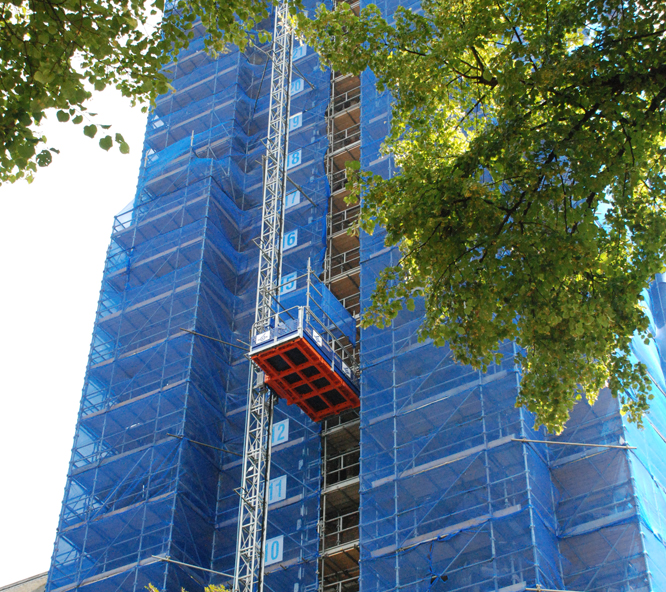
While many factors can affect a project’s timeline, one is consistently underestimated: vertical logistics. The efficiency of moving hundreds of workers and tons of materials to upper floors is the heartbeat of a high-rise hotel construction site. A weak pulse here means the entire project suffers.
This guide explores the three critical logistical bottlenecks in hotel construction and how a strategic approach to vertical access is the key to delivering your project on time and on budget.
The Unmovable Deadline: The True Cost of a Delayed Opening
Missing an opening date isn’t a minor setback; it’s a financial catastrophe. The costs go far beyond construction penalties.
| Type of Loss | Estimated Daily Cost (for a 200-Room Luxury Hotel) |
| Lost Room Revenue | $50,000 – $80,000+ USD |
| Cancelled Events & Bookings | Variable, potentially hundreds of thousands |
| Marketing & Re-launch Costs | Significant investment required to regain momentum |
| Reputational Damage | Incalculable |
The bottom line: Investing in efficient logistics isn’t a cost; it’s insurance against the catastrophic expense of delay.
Bottleneck #1: The Slow March of a Large Workforce
A typical hotel project requires hundreds of workers—electricians, plumbers, finishers—spread across multiple floors. How do they get to their workspace?
- The Inefficient Method: Waiting for a single, slow hoist or, even worse, climbing stairs. This wastes valuable energy and cuts into productive work time. A 15-minute delay for 100 workers every morning and after lunch equals 50 lost work-hours per day.
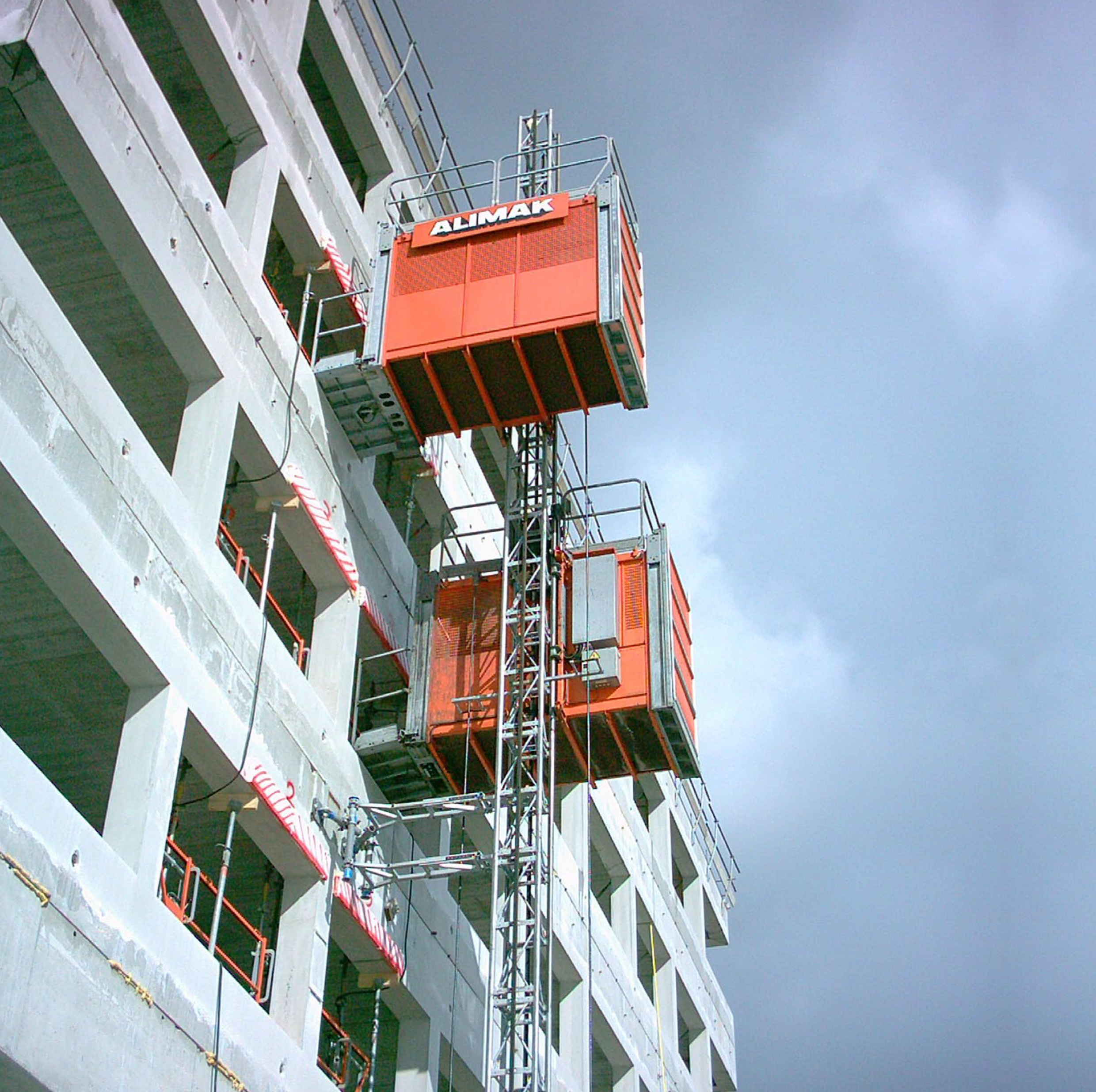
- The Solution: A high-speed, dual-car construction hoist like the Alimak Scando 650. It acts like a modern elevator, moving entire crews to their designated floors in minutes. This ensures workers arrive at their stations energized and ready to work, maximizing every billable hour.
Bottleneck #2: The Delicate Flow of Finishing Materials
The final 25% of a hotel project is a race to the finish line, involving a constant flow of materials that are often bulky and delicate: drywall, tiles, bathroom fixtures, glass panels, and furniture.
- The Inefficient Method: Relying solely on a tower crane. When the crane is busy with heavy structural lifts, the finishing materials wait. This creates a logistical standstill, leaving highly-paid finishing crews idle.
- The Solution: A dedicated construction elevator for materials. It creates a second, independent logistics channel, ensuring a constant, reliable flow of finishing materials to the upper floors without interfering with the crane’s operations. This keeps all crews working in parallel, dramatically accelerating the interior fit-out phase.
Bottleneck #3: Complex Façade and Exterior Work
Hotel designs often feature intricate facades, balconies, and large glass windows. This work requires workers and materials to be positioned with precision on the building’s exterior.
- The Inefficient Method: Traditional scaffolding. It is slow to erect and dismantle, obstructs other work on the ground level, and can be less safe for complex tasks.
- The Solution: An Alimak TPM or MC platform can be installed quickly and provides a large, stable area for workers, tools, and materials. It allows crews to work along an entire facade with greater speed, safety, and ergonomic comfort, speeding up the crucial process of making the building watertight.
Frequently Asked Questions (FAQs)
1. Can a single construction hoist serve a large, 500-room hotel project?
For a project of that scale, a dual-car elevator configuration is highly recommended. It allows one car to be dedicated to personnel while the other transports materials, creating maximum logistical efficiency.
2. How do Alimak elevators handle delicate materials like glass panels or furniture?
The smooth start and stop functionality of a frequency-controlled drive, like that in the Alimak Scando series, ensures materials are not jostled during transport, minimizing the risk of costly damage.
3. What is the biggest logistical mistake contractors make on hotel projects?
Underestimating the sheer volume of vertical movements required in the final finishing stages. Relying on a single crane for everything is the most common path to budget and schedule overruns.
Conclusion: Your Opening Date is Non-Negotiable
In the competitive Caribbean hotel market, time truly is money. The key to an on-time, on-budget opening lies in a smart and robust vertical logistics strategy. By eliminating bottlenecks in the movement of people and materials, you don’t just build a hotel; you build a profitable business from day one.
Your opening date is set. Let’s ensure your vertical logistics are up to the challenge.